
- 10ET 200M I/O stations
- V7.0 → V8.2PCS 7 version migrations
Control architecture
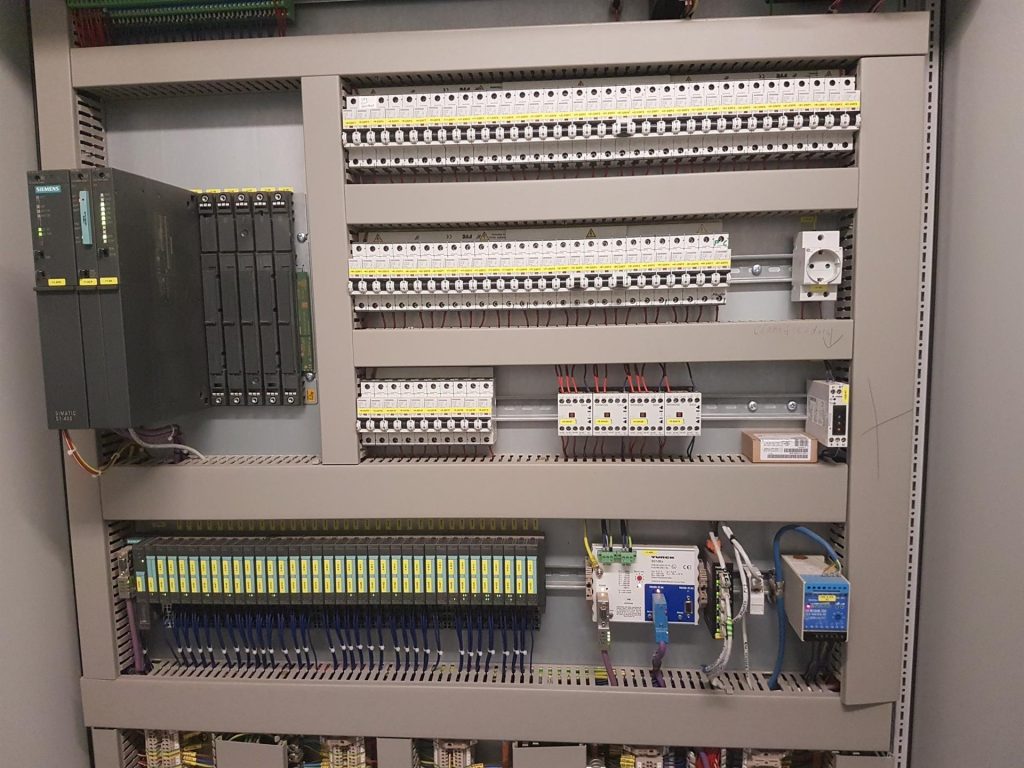
- CPU 416-2 DP controller with Profinet communication
- Ten ET 200M stations with digital and analogue inputs and outputs
- Motor starters on ET 200S I/O
- SITRANS instrumentation over Profibus PA (DP/PA Link)
- Two operator stations and one engineering station
- Safety functions programmed with S7 F Systems (Safety Integrated) within PCS 7 itself, including the tricanter (three-phase decanter centrifuge)
Integration with other systems
The PCS 7 system communicates with an S7-300F safety PLC, with another S7-400 controller programmed in STEP 7, with Omron equipment and with Danfoss drives, as well as with the plant’s WinCC stations.
2022 extension: acid splitting of glycerine with a tricanter
In the 2022 plant extension, MIESA automated the new glycerine acid-splitting unit with PCS 7. The glycerine is acidified with sulphuric acid in an agitated tank under pH control, and a tricanter separates it into three phases (glycerine, free fatty acids and salts); the treated glycerine returns to the demethanolisation column of the existing plant.
- 16 sequences programmed in SCL: recirculation and tricanter feed, acid and acid-water dosing, fatty acid and salt discharge, agitation, glycerine filtration and automatic filter cleaning
- Staged tricanter start-up: nitrogen inerting and oxygen analysis, lubrication, start of the screw and the bowl, and switch to production after an adjustment period
- Machine protections: seal pressure, bearing, seal and casing temperature, vibration, screw torque, bowl–screw differential speed and overspeed
- Automatic cyclic check of the inerting during operation
- More than 40 interlock conditions between the new unit and the existing plant, with setpoints adjustable by the operator
- Acid-water feed controlled by level and conductivity, turning a batch discharge into a continuous supply